Chocolate energy cubes
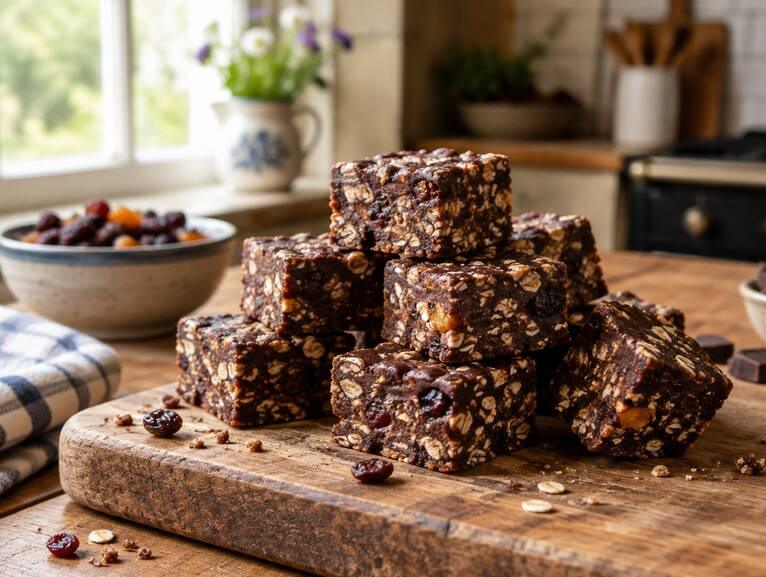
Makes 16No bakingKeeps 2–3 months
Inspired by the emergency chocolate rations soldiers carried in the Second World War.
You'll need
- 200 g dark chocolate (70%)
- 100 g rolled oats
- 75 g raisins, roughly chopped
- 50 g honey or golden syrup
- 30 g coconut oil (or butter, but it keeps for less time)
- 1 tsp ground cinnamon
- A pinch of salt
Method
- Line a 20 cm square tin with baking paper.
- Blitz the oats in a blender to a fine powder.
- Melt the chocolate, coconut oil and honey in a bowl over a pan of barely simmering water. Stir until smooth.
- Off the heat, stir in the oat powder, raisins, cinnamon and salt.
- Press firmly into the tin. Chill for 2 hours until hard.
- Cut into 16 cubes and wrap each one in baking paper or foil. Store in a tin somewhere cool.
Kate's tip: eat one as it is, or stir two into a mug of hot milk for a thick, warming chocolate porridge.
Anzac biscuits

Makes about 20No eggsKeeps 2–3 weeks
Baked by families in the First World War and posted to soldiers, because they kept so well.
You'll need
- 90 g rolled oats
- 85 g desiccated coconut
- 100 g plain flour
- 100 g caster sugar
- 100 g butter
- 1 tbsp golden syrup
- 1 tsp bicarbonate of soda
- 1 tbsp boiling water
Method
- Heat the oven to 180°C (160°C fan, gas 4). Line two baking trays.
- Mix the oats, coconut, flour and sugar in a large bowl.
- Melt the butter and golden syrup together in a small pan.
- Mix the bicarb with the boiling water and stir it into the butter. It will fizz.
- Pour into the dry ingredients and mix well.
- Roll into walnut-sized balls, space them out on the trays and flatten slightly.
- Bake for 8–10 minutes until golden. Cool on the tray for 5 minutes, then on a rack.
Kate's tip: a brilliant one for kids to make. They love the fizz.
Soup in a jar

One jar = 4 big bowlsKeeps up to 12 months dry
A store-cupboard soup in the spirit of wartime cooking. Layer it in a jar now, add water when you need it.
In the jar
- 100 g red lentils
- 100 g green split peas
- 75 g pearl barley
- 25 g dried onion flakes
- 2 tbsp vegetable stock powder (in a twist of paper on top)
- 1 tsp dried thyme
- ½ tsp black pepper
- 1 bay leaf
Method
- Use a clean, completely dry 1-litre jar. Layer in the split peas, barley, lentils and onion.
- Put the stock powder, thyme and pepper in a twist of baking paper on top, then the bay leaf. Seal and date it.
- To cook: tip it all into a large pan with 1.5 litres of water.
- Bring to the boil, then simmer with the lid half on for 45–60 minutes, stirring now and then, until the split peas are soft.
- Add more water if it's too thick. Remove the bay leaf, taste and add salt.
With bacon (tastier): fry 150 g chopped smoked bacon in the pan first, then add the jar and water. Add the bacon fresh on the day. Never store cooked bacon in the jar.
Wartime carrot cookies

Makes about 12Little sugarBest within 3–4 days
When sugar was rationed, the Ministry of Food encouraged families to sweeten bakes with grated carrot.
You'll need
- 25 g butter or margarine
- 25 g sugar
- A few drops of vanilla or orange essence
- 4 tbsp finely grated raw carrot
- 6 tbsp self-raising flour
Method
- Heat the oven to 200°C (180°C fan, gas 6). Grease a baking tray.
- Beat the butter and sugar until pale and creamy.
- Beat in the essence, then the carrot.
- Fold in the flour to a soft dough. Add a splash of water if it's too dry.
- Drop small spoonfuls onto the tray and flatten slightly.
- Bake for 15–20 minutes until golden. Cool on a rack.
Kate's tip: this is how the older generation got through rationing. Lovely to make with the kids.
Potted pork, sealed under butter

Fills 4 small jars3 hours slow-cookingFridge 2 weeks · freezer 3 months
The traditional British way to make one joint stretch for days: slow-cooked, packed tight and sealed with butter.
Keep it in the fridge or freezer. Never store it at room temperature. Meat sealed under fat without refrigeration can grow botulism, which can kill. Once opened, eat within 3 days.
You'll need
- 1 kg pork shoulder, skin off, in 5 cm chunks
- 2 tsp salt
- 1 tsp black pepper
- 2 garlic cloves, crushed
- 2 bay leaves
- 4 sprigs of thyme (or 1 tsp dried)
- ¼ tsp ground mace or nutmeg
- 150 ml water
- 100 g butter, to seal
Method
- Heat the oven to 150°C (130°C fan, gas 2).
- Put the pork in a casserole dish with the salt, pepper, garlic, bay, thyme, mace and water.
- Cover tightly and cook for 3 hours, until the meat falls apart.
- Lift out the meat. Pour the juices into a jug and let the fat rise.
- Shred the meat with two forks. Mix in 4–5 tbsp of the fat and a little juice. Taste and season.
- Pack tightly into clean jars, pressing hard to push out the air. Chill for 1 hour.
- Melt the butter, let it settle, and pour the clear butter over the top in a 1 cm layer to seal.
- Label with the date. Keep in the fridge or freezer.
Kate's tip: spread it thick on toast or crusty bread with a dollop of pickle.